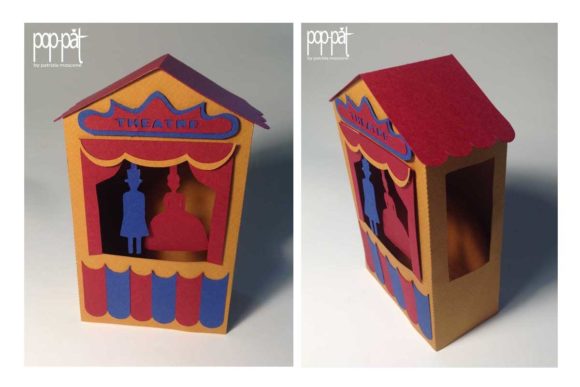
Puppet Theater for Creative Workflows and Digital Crafting
Puppet Theater is a powerful tool that helps creators, designers, and makers visualize and plan their projects before diving into execution. Whether you're working on a digital crafting project, a design concept, or a complex creative task, Puppet Theater can be an essential part of your workflow. It allows you to map out scenarios, test ideas, and refine processes in a structured way that enhances clarity and efficiency.
For users of tools like Silhouette SVG, DXF, PDF, and SVG Cricut, as well as platforms such as Cricut Design Space and Scan-N-Cut, Puppet Theater can serve as a bridge between conceptual planning and practical implementation. By using it effectively, you can ensure that your digital assets are well-organized, compatible with your software, and ready for seamless use in your projects.
Understanding Puppet Theater in the Context of Digital Crafting
Puppet Theater isn't just a tool for theatrical performances—it's a framework for visualizing and managing complex workflows. In the realm of digital crafting, this means breaking down the steps involved in creating a project, from initial design to final output. For example, when working with SVG files in Cricut Design Space, Puppet Theater can help you outline how each element will be used, what layers are necessary, and how different components interact.
By using Puppet Theater, you can identify potential issues early in the process. This could include checking compatibility between file formats, ensuring that designs are scalable, or confirming that elements align correctly when exported to PDF or DXF. This proactive approach saves time and reduces errors, making your workflow more efficient and reliable.
Integrating Puppet Theater with Cricut and Other Digital Tools
Cricut users who open the SVG_Cricut folder and read the notes contained in it will find that Puppet Theater can complement these resources by providing a structured way to manage and execute their projects. For instance, if you're working with a complex design that includes multiple layers or custom shapes, Puppet Theater can help you map out how each layer should be handled during cutting, printing, or assembly.
This integration also applies to other digital tools like Silhouette Studio and Scan-N-Cut. By using Puppet Theater to plan your workflow, you can ensure that your designs are optimized for these platforms. This might involve checking file formats, adjusting dimensions, or setting up templates that match your specific needs.
Practical Implementation Tips for Cricut Users
- Start with a clear vision: Before opening any design software, take time to define your goals and outline the steps required to achieve them. Puppet Theater can help you break this down into manageable parts.
- Use notes and annotations: When working with SVG files, make sure to document any specific instructions or adjustments needed. This can be done directly in the SVG_Cricut folder or through notes within Cricut Design Space.
- Test compatibility: Use Puppet Theater to simulate how your design will work across different platforms. This helps identify issues related to file format, resolution, or scalability before you begin cutting or printing.
Workflow Examples and Use Cases
Consider a scenario where you're creating a custom greeting card using Cricut Design Space. You might start by sketching out the layout and determining which elements need to be cut, printed, or layered. Using Puppet Theater, you can visualize each step of the process, from selecting the right SVG file to arranging text and images for maximum impact.
Another example involves preparing a set of SVG files for a craft project. By mapping out the sequence of actions—such as importing files, adjusting sizes, and exporting to the correct format—you can streamline your workflow and avoid common pitfalls. This is especially useful when working with multiple files or collaborating with others.
Factors to Consider for Effective Integration
When integrating Puppet Theater into your workflow, several factors can influence its effectiveness. These include preparation, organization, and consistency. Proper preparation ensures that you have all the necessary tools and resources ready before starting a project. Organization helps keep your files and notes in order, making it easier to reference them later.
Consistency is also key. By using Puppet Theater regularly, you develop a routine that supports efficient planning and execution. This can lead to better quality control, as you're more likely to catch errors or inconsistencies early in the process.
Long-Term Benefits of Using Puppet Theater
- Improved efficiency: With a clear plan in place, you spend less time troubleshooting and more time creating.
- Enhanced collaboration: Puppet Theater provides a shared framework that makes it easier to communicate your ideas and expectations to others.
- Greater flexibility: By visualizing different scenarios, you're better equipped to adapt to changes or unexpected challenges.
Conclusion: Making Puppet Theater Part of Your Creative Process
Incorporating Puppet Theater into your digital crafting workflow can transform the way you approach projects. Whether you're working with Cricut, Silhouette Studio, or other design tools, it offers a structured way to plan, execute, and refine your work. By understanding how it interacts with your existing tools and resources, you can unlock new levels of productivity and creativity.
Take the time to explore how Puppet Theater fits into your unique workflow. Experiment with different approaches, and don't hesitate to adjust your methods as needed. With practice and consistency, you'll find that Puppet Theater becomes an invaluable part of your creative process.